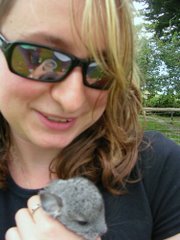
I'm halfway through my holidays. So far I have marked this many essays/ workbooks: None. I have planned this many units for next term: None.
However...
I have seen this many movies at the cinema: Three
I have watched this many movies on DVD: Four
I have seen this many comedy shows: Four
I have been out to this many meals in restaurants: Three
I have been out for coffee/ cake this many times: Four
I have seen my mentee for this many hours: Eleven
I have had this many meals at someone else's house: Two
I have borrowed this many books from my local library: Three
I have been on this many picnics: One
I have eaten this many hotcross buns: Eight
I have eaten this much chocolate: Incalculable
Cinema
Oh my god, Paul Thomas Anderson is annoying. He makes me swear. A lot. Absolutely loved 'There will be blood' until the final scene. Then I swore non stop for approximately three days. In better cinematic news, saw 'Grindhouse' at the Astor as Tarantino intended; the whole double feature complete with shlocky previews and fake ads. I have not laughed so much in years. See it while The Astor is still showing it. With a group of friends. Who like horror. And 70s kitsch. Awesome.
DVDs
I have now seen the following: Waitress (Awesome, hilarious, quirky. Go you Felicity chick, and you Captain from Serenity); Bra Boys (like my VCAL boys, plus surf); Brokeback Mountain (wow, THAT was way more full on than I was expecting); Capote (how annoying that ALL of my local libraries are out of the novel 'In Cold Blood'. I really want to read it now); the first two episodes of Spaced (someone I know used the word 'Hilarious'. I'm waiting for that to kick in, cos right now, I'm not seeing it).
Comedy
Gotta love a night when you pay for one comedy show (Daniel Kitson, The Ballad of Roger and Grace. Very cute and amusing) and get a three for one ticket to another show (Geraldine Hickey, oh my god she is funny. Wrong, and bogan, but so so funny), a completely free show (Jimmy James Eaton in Eaton Alive, utterley hilarious. He really shouldn't have to bribe an audience in just because he's getting reviewed. Folks should be fighting for those tickets), and then get dropped another free ticket on your way out (The Great Myspace Emigration of 07. One word- meh. Glad I didn't pay for that!!!). Am also hoping to catch Andrew McClelland teaching people to be gentleman, Bec Hill discussing superhero-ly stuff, and Fiona O'Loughlin just being damned funny. But we'll see. Cash is somewhat restricted.
Foodie delights
Discovered (after it had had three writeups in The Age) an awesome coffee shop, Liar Liar in Hawthorn, which uses an unusual coffee making process to uncap distinct scents and flavours within the coffee. Served in a snifter, and delivering a lighter coloured brew with a long caffeine hit, the changing flavours emerge as the coffee cools. Also very excited to try a new churros bar on Brunswick St, Juanita's. Churros very good, although the chocolate is a bit sweet. South American style, rather than Spanish. Excellent chorizo empanada. Check it out.
Eating in
Yay Helen for hosting our communal candlit dinner for Earth Hour. Gorgeous vego food, good wine, great company followed by a pleasant stroll through the darkened city. The stroll back featured my VCAL boys. How amusing.
Books
Am currently reading: Anna Karenina by Tolstoy- I WILL finish this eventually; The Whisper of the Blade, I forget the author, about various revolutions throughout history; River of Gods by Ian McDonald- awesome sci fi writer, read all of his books, now. Am currently resisting: The curious incident of the dog in the night time; a couple of young adult fiction books I borrowed from the library. Have just finished: Wicked.
Easter
My favourite celebration of the year. Why do fruit buns taste so much better with a cross on them? Yum. And thank you to those who have accepted that I really WOULD rather have one expensive chocolate item rather than lots of cheap chocolate. Yum again.
Plans in black and white (to encourage me to achieve them)
- Give blood. Booked in tomorrow. This should happen.
- Don't complain when the service my car is booked in for turns up lots of faults; they are probably all genuine, and I should just hand over my Visa now. Smilingly.
- Make sure I actually get to the Indonesian grocers to try my hand at making rendang from scratch. I am quietly confident.
- Cross my fingers that either my brother picks up his kitten tomorrow, or that the kitten is willing to sleep in a cupboard throughout upcoming house inspection.
- Oh yeah. Marking, planning. Whatever.
Showing posts with label Art. Show all posts
Showing posts with label Art. Show all posts
Sunday, March 30, 2008


Thursday, June 14, 2007
East and west
Having seen the effect of post WWII capitalist Bavaria, Berlin seemed to shine with the promise of contrast. I expected to see remnants of Walled West Berlin, surrounded by a uniform post-communist East city. However, travellers I'd met had advised me that there was almost no difference now between East and West, and that apart from the line of bricks marking the road, one couldn't recognise the divide.
Even my Berlin tour guide re-iterated this. Originally Welsh, she'd lived in West Berlin for two years. She told horror stories of friends' apartments in the East with shared toilets on the landing and shower in the kitchen, but this was really the only difference she knew of. Except for Ampelman, the communist traffic light symbol, different from the standard traffic warning image. And the fact that "There's nothing in West Berlin, really. East Berlin got all the cool stuff". But apart from THAT, East and West are exactly the same, she feels.
I stayed with friends in East Berlin, in a two room apartment. With a shower in the kitchen, and a shared toilet on the landing, quite normal in Europe, really. One of the couple works casually, while the other works 25 hours a week. Some of their neighbours are surprised that they have work at all, as 1 in 4 Berliners of working age are unemployed. Both of my friends earn far less than their counterparts working on the West side of town do. They advise that the best situation one can achieve in Berlin is to work in the West and live in the East, as food and rents are more expensive in the West. An East Berlin loaf of bread costing 1euro may cost 3euro in the West. Clearly the differences between the 'Two cities' are in existence if you look for them.
The fall of the wall clearly spelled a lot of changes for the socialist East Berlin. Conditions in the German Democratic Republic (GDR) had been difficult, with under supply of goods, lack of freedom of speech, and long, demanding working hours. An exhibition at the German History Museum on life in the GDR demonstrated the constant double speak (replicated in many East German jokes about the GDR), inequality and frustrations people lived with every day. So surely now that they'd joined their rich neighbours of the West in the land of Capitalism, all would be happy, right? The exhibition ended with a series of photographs and interviews with East Berliners directly after the fall, and in present day. Most of them found themselves worse off, rather than better. Their qualifications were not valid in the new world, their jobs unstable or non-existent, and their homes no longer a certainty. Most seemed diplomatic ("I was lucky to be allowed to work at all"), but some comments really resonate; "They could have left the wall standing and allowed greater travel allowances". For many, the move into the promised land has not been as expected.
Most of my time was spent in East Berlin, which comes across as an area fast becoming gentrified; but the spirit of many communities is still very friendly, a bit bohemian, creative. Market sellers happily barter the cost of their goods, and waiters will deliver complementary fruit as a dessert. Squats and communal kitchens, located in buildings emptied when their inhabitants departed for West Berlin, are identified by the colourful and socialist graffiti adorning the outer walls.
The inner city mixes remnants of the old city, replicas of old buildings and stunning modern architecture. And while Nazism is certainly not dead in Berlin, the city is determined to remember the tragedy of the Holocaust, in the hope it will not be replicated. Several controversial memorial dot the city: one features a mother cradling a dying boy, while beneath are buried a German soldier and a Holocaust victim, illustrating that War and Racism hurts everyone. Far more blatant is the Memorial for Murdered Jews, some 2700 concrete blocks erected to mark the deaths of millions of European Jews cover a large city block. While the interpretation of the striking memorial lies solely with the viewer, its main purpose is simply to be noticeable; the starkness, and the blocks which rise until they tower above you make the memorial difficult to ignore. Surely it stands as a reminder, and warning, that those things we turn a blind eye toward can come to overwhelm, and through apathy of bystanders become too powerful to counteract. Plans to erect a similar memorial for the other victims of the Holocaust (Roma, Sinta, homosexuals, Jehovah's Witnesses, etc) are underway.
Some people say there are still two cities, maybe even two countries. Others say this is ridiculous. Yet people still live who remember the division; who are still discriminated against in wages and jobs; who still find the shift to capitalism difficult and disillusioning. Thus surely these two cities MUST still exist. And as the whole reason for the division of Berlin was the notion that "whoever rules Berlin rules Germany", then it stands to reason that Germany is yet to become truly whole again.
Even my Berlin tour guide re-iterated this. Originally Welsh, she'd lived in West Berlin for two years. She told horror stories of friends' apartments in the East with shared toilets on the landing and shower in the kitchen, but this was really the only difference she knew of. Except for Ampelman, the communist traffic light symbol, different from the standard traffic warning image. And the fact that "There's nothing in West Berlin, really. East Berlin got all the cool stuff". But apart from THAT, East and West are exactly the same, she feels.
I stayed with friends in East Berlin, in a two room apartment. With a shower in the kitchen, and a shared toilet on the landing, quite normal in Europe, really. One of the couple works casually, while the other works 25 hours a week. Some of their neighbours are surprised that they have work at all, as 1 in 4 Berliners of working age are unemployed. Both of my friends earn far less than their counterparts working on the West side of town do. They advise that the best situation one can achieve in Berlin is to work in the West and live in the East, as food and rents are more expensive in the West. An East Berlin loaf of bread costing 1euro may cost 3euro in the West. Clearly the differences between the 'Two cities' are in existence if you look for them.
The fall of the wall clearly spelled a lot of changes for the socialist East Berlin. Conditions in the German Democratic Republic (GDR) had been difficult, with under supply of goods, lack of freedom of speech, and long, demanding working hours. An exhibition at the German History Museum on life in the GDR demonstrated the constant double speak (replicated in many East German jokes about the GDR), inequality and frustrations people lived with every day. So surely now that they'd joined their rich neighbours of the West in the land of Capitalism, all would be happy, right? The exhibition ended with a series of photographs and interviews with East Berliners directly after the fall, and in present day. Most of them found themselves worse off, rather than better. Their qualifications were not valid in the new world, their jobs unstable or non-existent, and their homes no longer a certainty. Most seemed diplomatic ("I was lucky to be allowed to work at all"), but some comments really resonate; "They could have left the wall standing and allowed greater travel allowances". For many, the move into the promised land has not been as expected.
Most of my time was spent in East Berlin, which comes across as an area fast becoming gentrified; but the spirit of many communities is still very friendly, a bit bohemian, creative. Market sellers happily barter the cost of their goods, and waiters will deliver complementary fruit as a dessert. Squats and communal kitchens, located in buildings emptied when their inhabitants departed for West Berlin, are identified by the colourful and socialist graffiti adorning the outer walls.
The inner city mixes remnants of the old city, replicas of old buildings and stunning modern architecture. And while Nazism is certainly not dead in Berlin, the city is determined to remember the tragedy of the Holocaust, in the hope it will not be replicated. Several controversial memorial dot the city: one features a mother cradling a dying boy, while beneath are buried a German soldier and a Holocaust victim, illustrating that War and Racism hurts everyone. Far more blatant is the Memorial for Murdered Jews, some 2700 concrete blocks erected to mark the deaths of millions of European Jews cover a large city block. While the interpretation of the striking memorial lies solely with the viewer, its main purpose is simply to be noticeable; the starkness, and the blocks which rise until they tower above you make the memorial difficult to ignore. Surely it stands as a reminder, and warning, that those things we turn a blind eye toward can come to overwhelm, and through apathy of bystanders become too powerful to counteract. Plans to erect a similar memorial for the other victims of the Holocaust (Roma, Sinta, homosexuals, Jehovah's Witnesses, etc) are underway.
Some people say there are still two cities, maybe even two countries. Others say this is ridiculous. Yet people still live who remember the division; who are still discriminated against in wages and jobs; who still find the shift to capitalism difficult and disillusioning. Thus surely these two cities MUST still exist. And as the whole reason for the division of Berlin was the notion that "whoever rules Berlin rules Germany", then it stands to reason that Germany is yet to become truly whole again.
Sunday, June 03, 2007
A nation divided
While post WWII Germany displayed a very tangible country division, Austria has also long been a nation divided. At some point in time, Austria's Hapsburg family have been rulers of mosy parts of Western Europe, so it always comes as shock when they lose ground; either through wars (Prussian), invasions (Napoleon), uprisings (Hungary's insistence on equality, creating the Austro-Hunagrian Empire, rather than the Austrian Empire) or diplomatic decision (Austria's most dramatic division following WWI, in which the empire was carved into independant countries and Austria became the tiny country we know today).
Austria was declared by Stalin the first 'victim' of Germany's atrocities, and thus for many years felt itself clear of any blame for war crimes, but in the 80s questions began to surface about how deeply involved Austria was in anti-semitic behaviour. Their actions in the past cast further doubt onto Austria's claims of innocence. Austria has had a Jewish population for a thousand years, and never really had an enforced ghetto as some European cities did (such as Venice, the original ghetto). But in the 14th century the Emporer herded most of the Jewish community into boats on the Danube, without oars, and let them float downstream.They landed in Hungary, beginning the large Hungarian Jewish population. The remaining Jews in Vienna, for fear of forced conversion, committed a mass suicide in the synagogue, which was burned down. When Jews were allowed to live in Vienna again (along with Protestants, and non Roman Catholic- Christians), they had to live by strict rules, including not presenting any aspect of their religion to the street.
When Hitler invaded Vienna, a referendum heralded a 98.5% vote in favour of him. However, if you see pictures of the referendum, it's quite clear that there was little choice but to vote yes. A picture of Hitler looks down on voters, and burly guards stand on either side, watching your vote. The yes box is huge, while the no box is tiny, and the 'how to vote' example is clearly marked yes. Apparently anyone who voted no was marched off in chains. However, recent investigation has found that probably 50% of the Austrian public genuinely supported being annexed to Germany; Austria having been such a dominant empire for so long, they simply didn't believe in it's ability to thrive as a tiny state.
Interestingly, one of the post WWII conditions was that Austria could not enter into any organisation of which Germany was a part. This means that, although Austria has been a demontsrably neutral country for fifty years, and is a successful member of the European community, they could not join the European Union until the Soviet Union collapsed, as this heralded the dissolution of the conditions.
Vienna is often described as a classical or old fashioned city; the Hapsburgs' support of the arts meant that creative types, especially musicians, flocked to Vienna (you may have heard of a few... Mozart, Strauss, Brahms). Yet despite the touts strolling the streets in get up of Mozart's times, Vienna is often devastatingly modern. 30% of Vienna was hit by bombing in WWII and had to be rebuilt. Otto Wagner and Hunderwasser erected buildings of controversially striking style, and Gustav Klimt redefined modern art standards, shocking people with his idealied female nudes.
I've seen modern art museums, and Mozart concerts in the Golden Hall (where the Vienna New Year's concert is performed each year). I've drunk far more coffee than is good for me, and I've listened to the most amazing choir perform in a church. And I'm loving it all :)
Austria was declared by Stalin the first 'victim' of Germany's atrocities, and thus for many years felt itself clear of any blame for war crimes, but in the 80s questions began to surface about how deeply involved Austria was in anti-semitic behaviour. Their actions in the past cast further doubt onto Austria's claims of innocence. Austria has had a Jewish population for a thousand years, and never really had an enforced ghetto as some European cities did (such as Venice, the original ghetto). But in the 14th century the Emporer herded most of the Jewish community into boats on the Danube, without oars, and let them float downstream.They landed in Hungary, beginning the large Hungarian Jewish population. The remaining Jews in Vienna, for fear of forced conversion, committed a mass suicide in the synagogue, which was burned down. When Jews were allowed to live in Vienna again (along with Protestants, and non Roman Catholic- Christians), they had to live by strict rules, including not presenting any aspect of their religion to the street.
When Hitler invaded Vienna, a referendum heralded a 98.5% vote in favour of him. However, if you see pictures of the referendum, it's quite clear that there was little choice but to vote yes. A picture of Hitler looks down on voters, and burly guards stand on either side, watching your vote. The yes box is huge, while the no box is tiny, and the 'how to vote' example is clearly marked yes. Apparently anyone who voted no was marched off in chains. However, recent investigation has found that probably 50% of the Austrian public genuinely supported being annexed to Germany; Austria having been such a dominant empire for so long, they simply didn't believe in it's ability to thrive as a tiny state.
Interestingly, one of the post WWII conditions was that Austria could not enter into any organisation of which Germany was a part. This means that, although Austria has been a demontsrably neutral country for fifty years, and is a successful member of the European community, they could not join the European Union until the Soviet Union collapsed, as this heralded the dissolution of the conditions.
Vienna is often described as a classical or old fashioned city; the Hapsburgs' support of the arts meant that creative types, especially musicians, flocked to Vienna (you may have heard of a few... Mozart, Strauss, Brahms). Yet despite the touts strolling the streets in get up of Mozart's times, Vienna is often devastatingly modern. 30% of Vienna was hit by bombing in WWII and had to be rebuilt. Otto Wagner and Hunderwasser erected buildings of controversially striking style, and Gustav Klimt redefined modern art standards, shocking people with his idealied female nudes.
I've seen modern art museums, and Mozart concerts in the Golden Hall (where the Vienna New Year's concert is performed each year). I've drunk far more coffee than is good for me, and I've listened to the most amazing choir perform in a church. And I'm loving it all :)
Thursday, May 31, 2007
Water, weather and wandering
Apparently, I should have also included in my 'tally' email the number of Italians who have hit on me. On my final day in Firenze, it was two (one random guy in the area where I was sheltering from torrential rain, one the chef at the place I had lunch). On my first day in Venezia, according to Lisa it was three; I say one and a half. The guy on the train was just making conversation, and the guy who asked us for coffee was hitting on us both. The waiter who brought me a free coffee with a heart drawn in the foam, I accept was attempting a pick up.
Anyway, when I'm not being hit on in Venezia, I am wandering aimlessly. The Venetian labyrinth can be challenging, as streets suddenly hit a canal, or make unexpected turns, meaning neither your direction or arrival time are guaranteed. I have decided to view this as representative of the slow pace of Venetian life, which highlights people watching as a major pastime. For example, in Teatro La Fenice (recently rebuilt in replica after a tragic fire in 1996), the most expensive boxes primarily face the audience, rather than the stage, as the REAL reason one goes to the opera in Venice is to see and be seen. Other Venetian arts, such as amazing glass blowing (mostly done on Murano Island, following fires caused by the practice) and theatrical arts (Carnavale, puppeteering, playing music on wine glasses) all capitalise on the flexibility of Venetian time. You can relax and wander in Venice. If you do anything else, you are CLEARLY a tourist.
The again, most of us ARE tourists in Venice. Only 68,000 actually live in Venice nowadays, compared to 250,000 of 100 years ago, and 70% of the economy depends on tourist trade. Tourist outnumber pigeons, impressive if you've ever seen the vast swarms of birds in Piazza San Marco. And yet, Venice has the worst tourist office I've come across... go figure.
Any 'direction' I've had in Venice has been towards food, churches and glass stores. If one, theoretically, liked Venetian glass, I, I mean THEY could spend a lot of time and money wandering the numerous stores that dot every street. Churches are almost as prolific, many houses artworks by Titian, Tintoretto, Rubens and Veronese.
But the cream on the Catholic cake is clearly the Basilica San Marco. Demonstrating Venezia's early links with the East, it is designed in the style of Greek Catholic churches; in fact a facsimile of the now demolished Church of the Twelve Apostles in Istanbul. St Mark's houses the body of St Mark, stolen by two wily Venetian merchants who smuggled it through Muslim areas under layers of pork! The facade of the church is amazing enough; between the facade and the floor, 60 different types of coloured marble have been used, and four (replica, the originals are inside, protected from weather) horses crowning the church date back over 200 years. But the truly stupendous aspect of the Basilica is inside; every wall and ceiling inch is covered in glass and gold leaf mosaic. This building is enormous, so the scale of this project is stunning. Aside from this, though, my personal favourite is the floor. You may know that, wooden support by wooden support, Venice is sinking. This is evident in the floor of the Basilica, which undulates, resembling a petrification of the lagoon outside. Only sometimes the lagoon isn't just outside; it likes to come inside too. Strong winds frequently cause acqua alta, high water, when the canals overreach their boundaries and join the pedestrians on the streets.
That's another nice thing about Venice; streets are only for pedestrians. There are NO CARS, which is so peaceful. Venice is traversed by foot, or by boat. Add peacefulness to the lapping of the water, always nearby, and you'll relax a little just at the thought. If you're not relaxed enough, try a Venetian beverage. Prosecco is a sparkling white Venetian wine; bellini combines prosecco and peach syrup; sprizze is prosecco, bitters and soda; and sgroppino is prosecco, vodka and lemon sorbet. Delicious!
While several things have happened which could have made Venice pretty stressful, such as mistakes with our hotel booking meaning we only had one bed, and thus having to change hotels; or the torrential rain on our first night herding us back to the safety of our hotel (which sported rude, racist staff and broken facilities), this hasn't resonated through my Venetian experience. It's clear why Venice is such a tourist hub, and has been for hundreds of years; the unique beauty of this place, cushioned in a culture perhaps more tourist orientated, but still fairly well preserved, makes it an absolute must.
Prior to choosing Venice as a destination, I had read an amazing book set in Venice, 'The City of Falling Angels'. Walking around, many things felt familiar. I'm fairly certain I also encountered some of the (local) characters featured i the book, which was exciting. Venice has this fairy tale vibe about it; it really feels like extraordinary tings can happen here. In fact, crossing a bridge I bumped into someone I had met in Milan. I've waded through main public squares, I've had random meetings, I've heard glasses sing symphonies, seen wooden puppets come to life, and I've had two of the most brilliant travel days doing nothing but wandering. Who says life can't be a fairy tale?
Anyway, when I'm not being hit on in Venezia, I am wandering aimlessly. The Venetian labyrinth can be challenging, as streets suddenly hit a canal, or make unexpected turns, meaning neither your direction or arrival time are guaranteed. I have decided to view this as representative of the slow pace of Venetian life, which highlights people watching as a major pastime. For example, in Teatro La Fenice (recently rebuilt in replica after a tragic fire in 1996), the most expensive boxes primarily face the audience, rather than the stage, as the REAL reason one goes to the opera in Venice is to see and be seen. Other Venetian arts, such as amazing glass blowing (mostly done on Murano Island, following fires caused by the practice) and theatrical arts (Carnavale, puppeteering, playing music on wine glasses) all capitalise on the flexibility of Venetian time. You can relax and wander in Venice. If you do anything else, you are CLEARLY a tourist.
The again, most of us ARE tourists in Venice. Only 68,000 actually live in Venice nowadays, compared to 250,000 of 100 years ago, and 70% of the economy depends on tourist trade. Tourist outnumber pigeons, impressive if you've ever seen the vast swarms of birds in Piazza San Marco. And yet, Venice has the worst tourist office I've come across... go figure.
Any 'direction' I've had in Venice has been towards food, churches and glass stores. If one, theoretically, liked Venetian glass, I, I mean THEY could spend a lot of time and money wandering the numerous stores that dot every street. Churches are almost as prolific, many houses artworks by Titian, Tintoretto, Rubens and Veronese.
But the cream on the Catholic cake is clearly the Basilica San Marco. Demonstrating Venezia's early links with the East, it is designed in the style of Greek Catholic churches; in fact a facsimile of the now demolished Church of the Twelve Apostles in Istanbul. St Mark's houses the body of St Mark, stolen by two wily Venetian merchants who smuggled it through Muslim areas under layers of pork! The facade of the church is amazing enough; between the facade and the floor, 60 different types of coloured marble have been used, and four (replica, the originals are inside, protected from weather) horses crowning the church date back over 200 years. But the truly stupendous aspect of the Basilica is inside; every wall and ceiling inch is covered in glass and gold leaf mosaic. This building is enormous, so the scale of this project is stunning. Aside from this, though, my personal favourite is the floor. You may know that, wooden support by wooden support, Venice is sinking. This is evident in the floor of the Basilica, which undulates, resembling a petrification of the lagoon outside. Only sometimes the lagoon isn't just outside; it likes to come inside too. Strong winds frequently cause acqua alta, high water, when the canals overreach their boundaries and join the pedestrians on the streets.
That's another nice thing about Venice; streets are only for pedestrians. There are NO CARS, which is so peaceful. Venice is traversed by foot, or by boat. Add peacefulness to the lapping of the water, always nearby, and you'll relax a little just at the thought. If you're not relaxed enough, try a Venetian beverage. Prosecco is a sparkling white Venetian wine; bellini combines prosecco and peach syrup; sprizze is prosecco, bitters and soda; and sgroppino is prosecco, vodka and lemon sorbet. Delicious!
While several things have happened which could have made Venice pretty stressful, such as mistakes with our hotel booking meaning we only had one bed, and thus having to change hotels; or the torrential rain on our first night herding us back to the safety of our hotel (which sported rude, racist staff and broken facilities), this hasn't resonated through my Venetian experience. It's clear why Venice is such a tourist hub, and has been for hundreds of years; the unique beauty of this place, cushioned in a culture perhaps more tourist orientated, but still fairly well preserved, makes it an absolute must.
Prior to choosing Venice as a destination, I had read an amazing book set in Venice, 'The City of Falling Angels'. Walking around, many things felt familiar. I'm fairly certain I also encountered some of the (local) characters featured i the book, which was exciting. Venice has this fairy tale vibe about it; it really feels like extraordinary tings can happen here. In fact, crossing a bridge I bumped into someone I had met in Milan. I've waded through main public squares, I've had random meetings, I've heard glasses sing symphonies, seen wooden puppets come to life, and I've had two of the most brilliant travel days doing nothing but wandering. Who says life can't be a fairy tale?
Monday, May 28, 2007
Neglected masterpieces
Tomorrow we leave for Venice, and I must make a confession; I didn't go to see David. I know, I know, I should have... but instead I:
-Went to the Uffizzi (having waited 1.5 hours to get in). It was ok. I'd kind of expected more, really liked some of the rooms (such as the Niobi room, which has pictures and sculptures relating to the Greek (?) myth in which Niobi declares her children more beautiful than some of the gods, who retaliate by raining arrows on her family from winged chariots.
-Went to Pentecostal Mass at the Duomo. One of the girls in my dorm was going (she goes to Mass every dazy, though), and was encouraging me to come along. I had no other plans, was intrigued by what it would be like, and loved the idea of hearing services in Italian. Very beautiful, even though I didn't always know what was going on- combination of not speaking the language and having rarely been to church. Another bonus was that I got to see the dome and stained windows, which you can't really see from the tourist entrance. Wish I'd been to the earlier Mass, though, which was in Latin and featured Gregorian chanting and a cardinal. Oh well. Still a nice experience.
- Went to Pallazzo Pitti, a former Medici mansion now used as a gallery. I liked this because many of the pictures were originally displayed in certain gallery rooms by the Medici's themselves. You also get to check out the state apartments. It would have been better had an audioguide been available. However I LOVED the costume gallery. Often a costume gallery refers to dress customs of an area, or an era. Here it actually referred to theatre costumes, and was supplemented by set plans and models for a range of plays, some of which were AMAZING. I theatre-geeked out for a while, it was perhaps my favourite thing I've seen in Florence!
And so, it's on to Venice. I have eaten gelati 6 times in 4 days, pizza twice, and pasta 5 times. I have lost count of the coffees. Florence was good.
-Went to the Uffizzi (having waited 1.5 hours to get in). It was ok. I'd kind of expected more, really liked some of the rooms (such as the Niobi room, which has pictures and sculptures relating to the Greek (?) myth in which Niobi declares her children more beautiful than some of the gods, who retaliate by raining arrows on her family from winged chariots.
-Went to Pentecostal Mass at the Duomo. One of the girls in my dorm was going (she goes to Mass every dazy, though), and was encouraging me to come along. I had no other plans, was intrigued by what it would be like, and loved the idea of hearing services in Italian. Very beautiful, even though I didn't always know what was going on- combination of not speaking the language and having rarely been to church. Another bonus was that I got to see the dome and stained windows, which you can't really see from the tourist entrance. Wish I'd been to the earlier Mass, though, which was in Latin and featured Gregorian chanting and a cardinal. Oh well. Still a nice experience.
- Went to Pallazzo Pitti, a former Medici mansion now used as a gallery. I liked this because many of the pictures were originally displayed in certain gallery rooms by the Medici's themselves. You also get to check out the state apartments. It would have been better had an audioguide been available. However I LOVED the costume gallery. Often a costume gallery refers to dress customs of an area, or an era. Here it actually referred to theatre costumes, and was supplemented by set plans and models for a range of plays, some of which were AMAZING. I theatre-geeked out for a while, it was perhaps my favourite thing I've seen in Florence!
And so, it's on to Venice. I have eaten gelati 6 times in 4 days, pizza twice, and pasta 5 times. I have lost count of the coffees. Florence was good.
Friday, April 20, 2007
A taste of French indulgence

For chocolate lovers, visiting Paris without a stop at Angelina (226 Rue de Rivoli) may well be a crime. You may have to wait for a table to become available in this busy tea salon, with little French old ladies and groups of tourists enjoying occupying the stately tables which fill every available space. The price list may not suit the budget traveller, but Angelina is the ultimate for a lavish desert. All the deserts looked divine, and I chose a particularly good Tarte Citron (some Melbourne readers may be aware of my Lemon Tart Quest. This is the furthest afield I have ventured, and well worth it!). But the creme de la creme here is the hot chocolate. Chocolat l'Affricain is like molten chocolate- delicious! Served in a jug, with a side dish of chantilly cream, the diner serves the chocolate to their liking. Thanks to Sarah (in Paris) for the tip! And if you feel the need to walk off the calories, you can stroll through the nearby Rivoli Gardens, or, as I did, visit the bookstore next door, which proudly boasts a tradition of stocking English books. I chose a few French books (translated in Anglaise, of course), to keep me entertained on my upcoming trip around France.

Of course, the French have made lavishness an art form. Yesterday I visited Versailles. Now anyone who has studied French History would know this, but I was a little surprised; Chateau Versailles is ENORMOUS! Almost every room is gloriously decorated, sporting painted ceilings and priceless paintings and furniture. As an aside, has anyone else noticed the way, as soon as something has a touch of gold or gilt, tourists feel the need to snap a picture? Amuses me a lot. Anyway, the chateau was impressive. I was particularly interested in Domaine de Marie-Antoinette, a section of the estate given to her by Louis XVI, which she fashioned into a pastoral hideaway from the ritual of court life. She apparently loved to spend time close to nature, such as on the small farm run for her amusement. But my favourite part of Versailles was the gardens. It was a beautiful day, and it was so nice to be able to sit on sections of the grass (a true luxury in Paris). Must admit I fell asleep for a while! Also saw an abundance of wildlife: catfish scrambling for crumbs; a woodpecker; and a French frog!

The visit to Angelina today was actually a side-trip on my excursion to the true symbol of French grandeur; Royal Palais de Musee Louvre. This place is stupidly big, so much so that it really frustrated me. According to Lonely Planet it would take nine months just to glance at all the exhibits. But once I found a sense of direction, I was able to enjoy the spectacular artworks within. I particularly enjoyed the sculpture galleries, and was glad that I finally braved the Da Vinci Code trailblazers and ventured into the Italian painting galleries. I am not joking about the Da Vinci Code, by the way- the Louvre actually offers a Da Vinci Code Audio-tour. I declined. A word of advice- your ticket is an all day pass, so take advantage of this, and take breaks outside the Musee for lunch or coffee. Don't eat inside the centre- it is overpriced and average fare. The all day pass is an especially good option if you visit on one of the days the centre is open late.

One thing that constantly amazes me about Paris is the quality of the buskers. They just don't do anything by halves here. Many buskers are professional musicians eking a living off generous tourists. The first time a I heard a piano accordion strike up while I was on the Metro was a true Amelie moment; it felt like a traditional French soundtrack had been added to my ordinary day. I've also thoroughly enjoyed: the string orchestral arrangement playing at one Metro; the Latin bad playing at another; the jazz trio improvising atop a wall near the steps of the Pompidou centre (below); and the electric harp player at Sacre Cour.
 And so my time in Paris is drawing to a close. Tomorrow's plans involve visiting the Museum of Middle Ages (which I am really looking forward to, nerd, nerd), ad a picnic at a chateau, followed by a crepe dinner. Then I strike out on my own while Lisa finishes up at work. I'm visiting Bordeaux, then Lyon and Strasbourg. Paris has been surprisingly good; my cynicism has been erased. I think my low expectations meant I could only be pleasantly surprised, and I have been. Paris is really a beautiful city, and it's so exciting when a waiter smiles at you, or when your hesitant attempts at French are understood. As Lisa insists, the difficulties of Paris make those ordinary moments extraordinary. Paris has that effect, somehow.
Wednesday, April 18, 2007
Supporting the arts
So yesterday I started the day at Musee d'Orsay, in a ridiculously long line (ask to see the photo when I come back, it looks like a crowd scene). However, I didn't see the Impressionists when they were at NGV because of the line, so there was no way I was leaving. 40 minutes later I got inside, and was happy to find out that my VIT card got me in for free :) Wow, I think that's the first time my VIT card did anything good for me.
I was not disappointed once inside either. Impressionism (which aims to capture a sense of light, and the impression of image) and neo-impressionism (which furthers the idea of creating a sense, rather than an image, by painting in a series of dots, which tricks the eye) are some of my favourite art forms. I wandered happily through a huge collection of Monet (it's so interesting to see more than just Waterlilies, he has a huge range of works), was amazed at Degas' skill with pastel (how do you imply the delicacy of tulle with a crayon???), and was disappointed by the relatively small collection of Renoir (my favourite artist). New favourites included Levy-Dhurmer and Redon, whose semi fantastical works bordered on surreal, and Henri Edmund Cross, who moves from neo-impressionism towards modern art, I think, with his use of blocky brush strokes rather than delicate dots. I also discovered that a lot of furniture design and artwork I like has a title to describe it; I have finally discovered what 'art nouveau' encompasses, and that I like it. It's all that swirly stuff from early 1900's, and it's purty. So I bought a book.
Afterwards met Lisa for a picnic in the park (Luxembourg Gardens), involving wine, baguette saucisson and three types of cheese, all divine. Very nice and cruisy. And cheesy. Then we met up with Lisa's friend Sarah, who was doing a radio interview with her about street art. For this we took a tour around (I think) 5th Arrondisement, and saw all sorts of stuff Lisa has blogged about- Nemo, Jef Aerosol, Mesnager, Miss Tic, the giraffes I like but can never remember who does them. Afterwards we went to an exhibition for Jef Aerosol's book, which was cool, and we met Mesnager and Jef. It was really exciting to see all this art, which has become part of Lisa's experience of Paris. It made my visit here seem more persona than the usual tourist trail.
Today I hit that tourist trail again though, heading for Sacre Cour. In a boulangerie on the way there, a guy said good bye to me in Italian. I guess my accent was terrible, and he was trying to place my nationality. Lisa thinks he thought I was the female version of Pepe le Pew. Sacre Cour was nice, particularly for it's amazing view of the city. It's on top of Montmartre, a raised part of the city, and the view just from the steps out front is lovely. If you shell out to climb the 276 stairs to the top (as I did), it's spectacular. Even more beautiful was the choir singing as I descended the staircase, and the amazing sound streaming out of the upper dome windows toward the sky.
Sarah had mentioned a fantastic hot chocolate pace around Concorde, so I wandered trying to find that (and failing), so instead strolled Champs Elysee, and a few shopping areas around there. Then jumped a train to the Musee Rodin. I had been considering going to see Rodin stuff, as his name nagged in the back of my head as one I knew for some reason. Then I saw a piece at Musee d'Orsay titled The Gates of Hell (e porte l'enfern, I think), which was spectacular, and sealed my decision. I'm sure some of you still can't place his work, though. Perhaps you are sitting with your head in your hands as you ponder? If so, you may resemble his best known work, The Thinker (La Pensive). It's the first work you see as you stroll around the beautiful gardens surrounding the museum. I loved this museum, it's a lot smaller than some of the other museums in Paris, and mostly made up of sculptures. I also got in for free, which made me like it more :)
Then I did as all good tourists do when in Paris: finally, I visited the Eiffel Tower. I didn't go up (long lines, hefty-ish price tag, meant to meet Lisa, plus what would I look at up there? Normally from a Parisian vantage point I try to spot the Eiffel Tower...), but was surprised to discover that the tower is a lot more beautiful, complex and impressive when you're close up. It's easy to become blase, as it's such a cliched image now, but this is a beautiful structure, and caused a huge uproar when first erected. Even the French didn't like it, now it is the most recognised (and prided) symbol of their country.
I'm now back at Lisa's, chilling out. She's gone to a Pinter play translated into French, and I have decided to be lazy and not go. Instead I am blogging, resting, cooking dinner and planning my tomorrow. I might go out for a drink or desert later, too; there are so many bars and restaurants around here. I was amazed, when I went for a walk after dark on Monday night, to find the place still buzzing. Lise says it often is still buzzing at 2am. Ah, gay Paris!
I was not disappointed once inside either. Impressionism (which aims to capture a sense of light, and the impression of image) and neo-impressionism (which furthers the idea of creating a sense, rather than an image, by painting in a series of dots, which tricks the eye) are some of my favourite art forms. I wandered happily through a huge collection of Monet (it's so interesting to see more than just Waterlilies, he has a huge range of works), was amazed at Degas' skill with pastel (how do you imply the delicacy of tulle with a crayon???), and was disappointed by the relatively small collection of Renoir (my favourite artist). New favourites included Levy-Dhurmer and Redon, whose semi fantastical works bordered on surreal, and Henri Edmund Cross, who moves from neo-impressionism towards modern art, I think, with his use of blocky brush strokes rather than delicate dots. I also discovered that a lot of furniture design and artwork I like has a title to describe it; I have finally discovered what 'art nouveau' encompasses, and that I like it. It's all that swirly stuff from early 1900's, and it's purty. So I bought a book.
Afterwards met Lisa for a picnic in the park (Luxembourg Gardens), involving wine, baguette saucisson and three types of cheese, all divine. Very nice and cruisy. And cheesy. Then we met up with Lisa's friend Sarah, who was doing a radio interview with her about street art. For this we took a tour around (I think) 5th Arrondisement, and saw all sorts of stuff Lisa has blogged about- Nemo, Jef Aerosol, Mesnager, Miss Tic, the giraffes I like but can never remember who does them. Afterwards we went to an exhibition for Jef Aerosol's book, which was cool, and we met Mesnager and Jef. It was really exciting to see all this art, which has become part of Lisa's experience of Paris. It made my visit here seem more persona than the usual tourist trail.
Today I hit that tourist trail again though, heading for Sacre Cour. In a boulangerie on the way there, a guy said good bye to me in Italian. I guess my accent was terrible, and he was trying to place my nationality. Lisa thinks he thought I was the female version of Pepe le Pew. Sacre Cour was nice, particularly for it's amazing view of the city. It's on top of Montmartre, a raised part of the city, and the view just from the steps out front is lovely. If you shell out to climb the 276 stairs to the top (as I did), it's spectacular. Even more beautiful was the choir singing as I descended the staircase, and the amazing sound streaming out of the upper dome windows toward the sky.
Sarah had mentioned a fantastic hot chocolate pace around Concorde, so I wandered trying to find that (and failing), so instead strolled Champs Elysee, and a few shopping areas around there. Then jumped a train to the Musee Rodin. I had been considering going to see Rodin stuff, as his name nagged in the back of my head as one I knew for some reason. Then I saw a piece at Musee d'Orsay titled The Gates of Hell (e porte l'enfern, I think), which was spectacular, and sealed my decision. I'm sure some of you still can't place his work, though. Perhaps you are sitting with your head in your hands as you ponder? If so, you may resemble his best known work, The Thinker (La Pensive). It's the first work you see as you stroll around the beautiful gardens surrounding the museum. I loved this museum, it's a lot smaller than some of the other museums in Paris, and mostly made up of sculptures. I also got in for free, which made me like it more :)
Then I did as all good tourists do when in Paris: finally, I visited the Eiffel Tower. I didn't go up (long lines, hefty-ish price tag, meant to meet Lisa, plus what would I look at up there? Normally from a Parisian vantage point I try to spot the Eiffel Tower...), but was surprised to discover that the tower is a lot more beautiful, complex and impressive when you're close up. It's easy to become blase, as it's such a cliched image now, but this is a beautiful structure, and caused a huge uproar when first erected. Even the French didn't like it, now it is the most recognised (and prided) symbol of their country.
I'm now back at Lisa's, chilling out. She's gone to a Pinter play translated into French, and I have decided to be lazy and not go. Instead I am blogging, resting, cooking dinner and planning my tomorrow. I might go out for a drink or desert later, too; there are so many bars and restaurants around here. I was amazed, when I went for a walk after dark on Monday night, to find the place still buzzing. Lise says it often is still buzzing at 2am. Ah, gay Paris!
Monday, April 16, 2007
Spirits of chairs and churches
A friend of mine has some clear plastic chairs, which she loves. They are Phillipe Starck Louis Ghost Chairs, and I had never seen them before until I visited this friend's new unit. Then I read an article about them in my weekend paper. And now I have seen them on display in an art museum.
Even though I find modern art very challenging, and I often don't like it, I keep taking myself to modern art galleries. While in London, Lisa and I visited Tate Modern, and today I checked out the Pompidou Centre in Paris. While I connected with fewer artworks at Pompidou, I think the selection of works was better. It featured a variety of media, ranging from sculpture, to video, to homeware design (hence the Phillipe Starck stuff).
I find that I am less forgiving with modern art. It evokes very strong reactions in me, I either love something, hate it or am completely uninterested. More classical art tends to promote a more reflective viewing style for me, so I am more inclined to develop a considered opinion of the piece. But at the modern galleries I have visited I have liked:
- some Cy Twombly work, particularly the Seasons, on display at Tate
- the New York photography on display at Pompidou. I have forgotten the artists
- Mattisse
- Pollock. Not very original choice, I know!
- Paul Nash
- Kandinsky (part of the Bauhaus movement)
- Dali. Again, not very original choice. Meh.
- Phillipe Starck. His designs are SO artistic, sometimes to the point that they are completely impractical. It's cool, haute merchandise domestique!
Weirdest thing I've seen in these moder galleries: a room entirely devoted to inflatable things. Some of this was inflatable art, but some was actually just inflatable furniture, a la 1960s, or plans for it, or photos of it. C'est bizarre.
I also chose to visit a site from another historical extreme today- Notre Dame. Lisa just smiles and nods when I get excited about churches... I am a little obsessive. I seem to remember similar reactions from Jackie by the end of our New Zealand trip... and the churches in Europe are of course far more numerous and spectacular! So church visits are something for me to indulge in when Lisa and I are solo exploring. I am not at all religious, but am fascinated by expression of faith, a subject I think was awakened when I wrote my thesis. So I just love exploring churches, religious artwork and literature, etc.
Anyway, Notre Dame is gorgeous, and particularly intriguing for its literary connections, as well as the general religious beauty. In fact, it is the literature (The Hunchback of Notre Dame, by Victor Hugo) which is responsible for the restoration of the Cathedral; prior to the success of Hugo's novel, the site had fallen into disrepair. In fact, the cathedral was ransacked the very day Hunchback was released.
I decided to commit to the wait and the fee involved with visiting the towers, and was glad I did. The steps are a challenge (472, I think), but the view was fantastic; both of Paris, and of the gargoyles and other monsters, each individualised, and the flying buttresses (it's a churchy thing, common on Gothic style churches).
Apart from that, Paris has seen me attempting French, people watching and just wandering alleys. Oh, and eating as much stereotypical food as possible. Lisa brought me croissant and pan au chocolat for breakfast (I can not BELIEVE how good French croissants really are! Wow!); we had wine with dinner (Sancerre, I think. It's a white wine, hints of apple, very crisp and refreshing); crepe fromage for lunch; and tomorrow we will picnic for lunch, with plans of baguette, cheese and saucisson. Mmmmm..... :)
Even though I find modern art very challenging, and I often don't like it, I keep taking myself to modern art galleries. While in London, Lisa and I visited Tate Modern, and today I checked out the Pompidou Centre in Paris. While I connected with fewer artworks at Pompidou, I think the selection of works was better. It featured a variety of media, ranging from sculpture, to video, to homeware design (hence the Phillipe Starck stuff).
I find that I am less forgiving with modern art. It evokes very strong reactions in me, I either love something, hate it or am completely uninterested. More classical art tends to promote a more reflective viewing style for me, so I am more inclined to develop a considered opinion of the piece. But at the modern galleries I have visited I have liked:
- some Cy Twombly work, particularly the Seasons, on display at Tate
- the New York photography on display at Pompidou. I have forgotten the artists
- Mattisse
- Pollock. Not very original choice, I know!
- Paul Nash
- Kandinsky (part of the Bauhaus movement)
- Dali. Again, not very original choice. Meh.
- Phillipe Starck. His designs are SO artistic, sometimes to the point that they are completely impractical. It's cool, haute merchandise domestique!
Weirdest thing I've seen in these moder galleries: a room entirely devoted to inflatable things. Some of this was inflatable art, but some was actually just inflatable furniture, a la 1960s, or plans for it, or photos of it. C'est bizarre.
I also chose to visit a site from another historical extreme today- Notre Dame. Lisa just smiles and nods when I get excited about churches... I am a little obsessive. I seem to remember similar reactions from Jackie by the end of our New Zealand trip... and the churches in Europe are of course far more numerous and spectacular! So church visits are something for me to indulge in when Lisa and I are solo exploring. I am not at all religious, but am fascinated by expression of faith, a subject I think was awakened when I wrote my thesis. So I just love exploring churches, religious artwork and literature, etc.
Anyway, Notre Dame is gorgeous, and particularly intriguing for its literary connections, as well as the general religious beauty. In fact, it is the literature (The Hunchback of Notre Dame, by Victor Hugo) which is responsible for the restoration of the Cathedral; prior to the success of Hugo's novel, the site had fallen into disrepair. In fact, the cathedral was ransacked the very day Hunchback was released.
I decided to commit to the wait and the fee involved with visiting the towers, and was glad I did. The steps are a challenge (472, I think), but the view was fantastic; both of Paris, and of the gargoyles and other monsters, each individualised, and the flying buttresses (it's a churchy thing, common on Gothic style churches).
Apart from that, Paris has seen me attempting French, people watching and just wandering alleys. Oh, and eating as much stereotypical food as possible. Lisa brought me croissant and pan au chocolat for breakfast (I can not BELIEVE how good French croissants really are! Wow!); we had wine with dinner (Sancerre, I think. It's a white wine, hints of apple, very crisp and refreshing); crepe fromage for lunch; and tomorrow we will picnic for lunch, with plans of baguette, cheese and saucisson. Mmmmm..... :)
Saturday, April 07, 2007
Ten thousand steps
The Grand Old Duke of York, He took ten thousand steps. Ok, that's not quite how it goes, but trust me, if he were getting about London there's a darn good chance he took ten thousand steps. Could even have been ten thousand stairs (the Brits are very traditional about some things, such as stairs, and promoting tea quality over that of coffee). Especially if he were trying to see it all in three days like some Naomi's we know.
But I am having a great time. Highlights: Seeing an 11th century copy of 'Beowulf' (yeah, yeah, geek I know); having a squirrel run up my leg; being able to confidently navigate the rail system, despite line closures over the long weekend.
Yesterday I:
-Visited the British Museum. Sadly most of the medieval stuff was not on display as there are new medieval rooms opening next year :( Still got to see all the Sutton Hoo and pre Anglo-Saxon Celtic stuff (let your eyes glaze over if you don't know what I am talking about here). My favourite exhibit was the Assyrian section, which was awesome. Marvelled at how awful British coffee is.
- Hung out in Russell Square, feeding squirrels
- Visited the National Library (oh geek out), which has a bunch of old books to make me swoon: Shakespeare folios; handwritten Alice in Wonderland; stacks of illuminated gospels, including the Lindisfarne; Chaucer; and my faves- Beowulf and the Magna Carta. Swoon.
- Hung out at Leicester Square, and found pretty cheap food in Chinatown
- Went to bed by 8pm, exhausted from 24 hours travelling and a day of sightseeing
Today I:
- Got an Oyster card for the trains- so I look like a local, and am saving money, and can get on any form of pt without fear of having the wrong ticket. Yay! I can't wait until Melbourne introduces the myki system, which will be similar.
- Trekked the National Gallery and checked out Trafalgar Square. My favourite stuff was, unsurprisingly, the 12th century section. Most of it is religious, and it is just so so cool. Was going to check out the Renoir exhibition (he being my favourite artist), but it cost £12 and I am trying not to blow all my cash at once. I can see Renoir in France.
- Wandered the wrong way (aiming for Leicester Square) to discover St James Park is very close to the Gallery. Had lunch looking at ducks and hoping no-one would come and charge me for sitting on a park bench (they didn't). Marvelled at how decent even the cheapest tea is- especially impressive considering how disgusting the coffee is. As Lisa said, that's why the Brits are tea drinkers.
- Made my way through the Horse Guard to Parliament House and (sigh) Westminster Abbey. Sadly Westminster was closed to tourists today, but I wandered what was accessible of the cloisters. Might revisit it next week.
- Strolled to Piccadilly Circus (feeling more and more like I am on a Monopoly board), caught tube to Leicei#ster Square to check out discount theatre tickets. I am seeing Les Miserables tonight. Really wanted to see Wicked, but the discount price was £40. I'm paying over £10 less for Les Mis, and I've never seen it, so it will be exciting. 12 rows from stage.
- Found a discount net cafe to blog and plan my train journey to Norwich tomorrow.
Later I will:
- Possibly wander through Hyde Park and over to the palace. It's probably something you have to do, right?
- Go to the theatre! Hopefully having picked up more cheap Asian for dinner.
- Try and find my way home again.
- Pack to leave my hostel tomorrow.
Next week, when in London again, I plan to check out:
- St Paul's
- London Tower
- London Dungeon
- Greenwich markets (we're staying in Greenwich next week)
- Westminster again, maybe
OK, off to a National Rail station to work out if I need to book a seat on my train tomorrow. Then I shall visit the queen.
But I am having a great time. Highlights: Seeing an 11th century copy of 'Beowulf' (yeah, yeah, geek I know); having a squirrel run up my leg; being able to confidently navigate the rail system, despite line closures over the long weekend.
Yesterday I:
-Visited the British Museum. Sadly most of the medieval stuff was not on display as there are new medieval rooms opening next year :( Still got to see all the Sutton Hoo and pre Anglo-Saxon Celtic stuff (let your eyes glaze over if you don't know what I am talking about here). My favourite exhibit was the Assyrian section, which was awesome. Marvelled at how awful British coffee is.
- Hung out in Russell Square, feeding squirrels
- Visited the National Library (oh geek out), which has a bunch of old books to make me swoon: Shakespeare folios; handwritten Alice in Wonderland; stacks of illuminated gospels, including the Lindisfarne; Chaucer; and my faves- Beowulf and the Magna Carta. Swoon.
- Hung out at Leicester Square, and found pretty cheap food in Chinatown
- Went to bed by 8pm, exhausted from 24 hours travelling and a day of sightseeing
Today I:
- Got an Oyster card for the trains- so I look like a local, and am saving money, and can get on any form of pt without fear of having the wrong ticket. Yay! I can't wait until Melbourne introduces the myki system, which will be similar.
- Trekked the National Gallery and checked out Trafalgar Square. My favourite stuff was, unsurprisingly, the 12th century section. Most of it is religious, and it is just so so cool. Was going to check out the Renoir exhibition (he being my favourite artist), but it cost £12 and I am trying not to blow all my cash at once. I can see Renoir in France.
- Wandered the wrong way (aiming for Leicester Square) to discover St James Park is very close to the Gallery. Had lunch looking at ducks and hoping no-one would come and charge me for sitting on a park bench (they didn't). Marvelled at how decent even the cheapest tea is- especially impressive considering how disgusting the coffee is. As Lisa said, that's why the Brits are tea drinkers.
- Made my way through the Horse Guard to Parliament House and (sigh) Westminster Abbey. Sadly Westminster was closed to tourists today, but I wandered what was accessible of the cloisters. Might revisit it next week.
- Strolled to Piccadilly Circus (feeling more and more like I am on a Monopoly board), caught tube to Leicei#ster Square to check out discount theatre tickets. I am seeing Les Miserables tonight. Really wanted to see Wicked, but the discount price was £40. I'm paying over £10 less for Les Mis, and I've never seen it, so it will be exciting. 12 rows from stage.
- Found a discount net cafe to blog and plan my train journey to Norwich tomorrow.
Later I will:
- Possibly wander through Hyde Park and over to the palace. It's probably something you have to do, right?
- Go to the theatre! Hopefully having picked up more cheap Asian for dinner.
- Try and find my way home again.
- Pack to leave my hostel tomorrow.
Next week, when in London again, I plan to check out:
- St Paul's
- London Tower
- London Dungeon
- Greenwich markets (we're staying in Greenwich next week)
- Westminster again, maybe
OK, off to a National Rail station to work out if I need to book a seat on my train tomorrow. Then I shall visit the queen.
Subscribe to:
Posts (Atom)